
A Font for All Seasons

There are a variety of ailments that disproportionately affect writers. Mundane disorders such as Repetitive Stress Injury, Computer Eyestrain and assorted carbuncles arise as no surprise. But there is another, psychological malady that can cripple an author’s creativity and savage his time schedule.

A fascination with fonts is a logical curiosity among people who love words. You can find stylized fonts reflecting for almost any special interest. In fact, just four months ago the total number of fonts surpassed the population of the planet. An affection for different fonts is one thing . . . but an obsession is quite another. Addicts are commonly referred to as “fontaholics.”

There truly are fonts for all seasons . . . too many versions to number. As an example of a unique font, you can check out Narnia BLL.

This lovely lettering is inspired by the recent films about the land of C.S. Lewis’ anointed Chronicles.

And It’s Not Just about Aesthetics

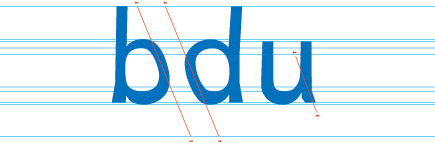
Recently a Dutch scholar devised a nefont specifically for people suffering from dyslexia.

Their approach, based on “weighting” the various letters and symbols, has been shown to improve readability for dyslexics. (Truth is, it would probably make reading easier for anyone.) Some see this new font as reinforcing prior studies which show serif fonts to be more legible than sans serif versions.

Whether you consider yourself immune to the lure of fonts, or are a self-confessed fontaholic, it’s a field about which every writer should understand the basics.

What’s So Important about the Milvian Bridge?

Constantinian Triumph CoinWhile pondering what to write about today, I visited one of those “This Day in Christian History” websites. It cited 27 September as the day of Constantine the Great’s “conversion” (in the year A.D. 312). Ironically, the website was in error, with the actual date being the evening of 27 October.

Many people might say “what difference does it make?” but writers will be reminded once again of the necessity of accuracy in their writings! What sort of credibility do you think that website now holds for me?

At any rate, returning to the subject of Constantine’s October 312 conversion . . . it was one of the pivotal events in the history of the world. Not only did Constantine end the persecution of the Church, he raised Christianity to the status of favored religion. Contrary to most quasi-historians, it would be left to a later emperor to establish Christianity as the empire’s official faith.

The early fourth century was a turbulent and fascinating time. Constantine had to battle a number of other so-called Imperators. (“Caesar” remained one of their many titles, but it was no longer the synonym for the ultimate ruler.) One of Constantine’s challengers—who allied himself completely with the pagan faction which still vastly outnumbered the Christians—was Maxentius.

On the evening before the battle, in response to a divine vision, Constantine had his soldiers mark their shields with a symbol for Christ (most likely, a chi-rho). He would ultimately march under that sign to victory over all of his enemies. Licinius, his final foe, would also throw his lot with the pantheon of Rome and other pagan deities. Like Maxentius, he too would fall.

This coin was minted by Constantine to commemorate his victory over these agents of the “Serpent.” The Labarum (Constantine’s standard, topped by the chi-rho) pierces the creature. The legend on the coin reads “Spes Publica,” which means “hope of the people.”

On the matter of just how transformative Constantine’s spiritual conversion actually was . . . well, that’s a subject for another day. Suffice it to say now that he regarded his allegiance to Christ as sincere, and he never recanted. Oh, and the importance of the Milvian Bridge . . . if Maxentius had not fallen there, history would read quite differently today.