
Military Helmets

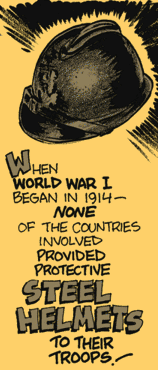
War is deadly business. And, if a kingdom or nation hopes to emerge victorious, they are wise to equip their soldiers properly. That’s why this fact, included in today’s Ripley’s Believe It or Not comic, is so shocking.

It’s inconceivable that as the world marched to war in 1914, not a single one of the world powers equipped their troops with steel helmets. Elegant helms that looked superb on the parade ground . . . yes. Elaborate crests that exaggerated height to intimidate the foe . . . of course. Comfortable fabrics that kept the scorching sun off of the scalp . . . certainly.

But steel helmets that might actually spare men from bullet and shrapnel wounds . . . not those.

It’s not like the danger of ballistic wounds caught the Europeans off guard. Muskets had given way to deadly rifles long before. Artillery had advanced to the point where the Germans actually built not one, but two unique weapons: (1) Big Bertha, a huge howitzer that lobbed an eighteen hundred pound shell nearly eight miles, and (2) the Paris Gun, a siege cannon able to fire its shell eighty miles!

As soldiers like C.S. Lewis and J.R.R. Tolkien rallied to the flag and fought the Huns, they would eventually be issued more protective equipment. But it didn’t exist at the war’s outset. And even with it, Lewis was severely wounded in combat. in 1939 he wrote, “My memories of the last war haunted my dreams for years.”
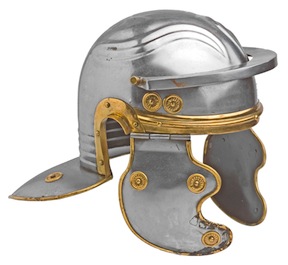
The irony about metal helmets is that even ancient peoples recognized the importance of protecting the skulls of their warriors with the strongest materials available. In my office I have a replica Roman legionary helmet. Trust me, it was capable of saving lives.

Today’s combat helmets are highly advanced, and great effort is made to protect military members from head trauma. Sending them into battle with anything less than the best equipment available should be a crime.
UAVs and Manuscripts

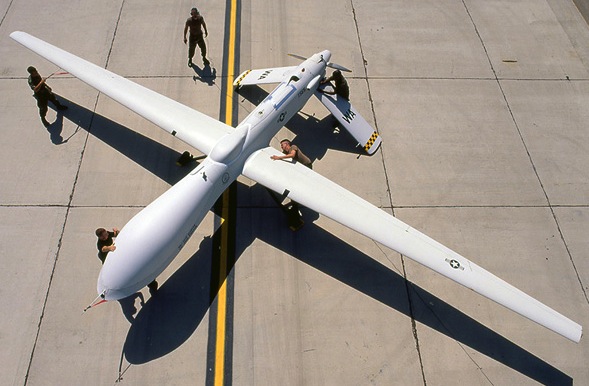
Iran’s capture of an extremely sophisticated (and classified) drone is a huge disaster. Now the enemies of democracy will be able to duplicate our technology without having to spend a penny on research. As too often happens (usually through espionage), our fascist enemies have stolen advances that make them much greater threats. (I use the plural here, because there’s no doubt Iran will share/sell much of what they learn with mainland China, North Korea and various other dangerous regimes.)

Unmanned Aerial Vehicles (UAVs) are particularly cutting edge. Some voices in the Department of Defense already advocate creating an entirely unmanned Air Force. What used to be science fiction sometimes becomes science fact.

Nearly a decade ago, on the first anniversary of the September 11 attacks, I found myself serving as a chaplain in one of the “-stans” on the other side of the globe. It was during the early days of Operation Enduring Freedom, and there was an intense commitment to the mission. A price was being paid in Coalition lives, but virtually everyone there believed the steep cost would be worth it, as the world became a safer place.

One of the major activities at our air base involved supporting the Predator mission. It was novel. It was exciting. One can only imagine how advanced these platforms have become during the intervening decade. Well, you don’t need to merely “imagine;” many of the innovations are public knowledge. And yet, wisdom suggests that the most amazing advancements are not publicly acknowledged. Most civilians can’t understand just how serious a setback it is for this surveillance and/or weapon system to be captured by extremists.

Turning from the world of current affairs to a subject far less threatening . . . how might this relate to writing? We’re told to “write about what you know,” so our past experiences provide a rich resource for both our factual and fictional efforts. Unless we are simply allowing our thoughts to flow as they may, we find that research remains an essential part of writing even about that which we know.

Case in point. I have served with Predator drones. Watched them being launched and then gracefully land. I’ve touched them. Even though I’m retired from active duty, I belong to several military professional organizations and I subscribe to a variety of military publications. I’ve read a lot about UAVs over the years—but before I would ever attempt to compose a story featuring one, I’d plan to do a significant amount of research.

And that may be one of the few things I have in common with truly good writers. They pay attention to the details, and they get them right. It’s dangerous to assume that we are ever familiar enough with a subject to write off the proverbial “cuff.” Nothing destroys a story’s (or author’s) credibility than surely than getting facts wrong. And that’s certainly one fact worth being reminded of.

Veterans Day: Joyous or Somber?

Much of the world commemorates Armistice Day, or as it has come to be known in the United States, Veterans Day. It is fitting to offer thanks for those who have gone to war to defend our freedoms, especially those who sacrificed their lives in that cause.

C.S. Lewis was a veteran of the “war to end all wars.” He was recuperating from severe battle wounds in an army hospital when WWI came to its conclusion. Just a few days after the Armistice, he wrote to his father:

As to the great news which is uppermost in our minds, I can only echo what you have already said. The man who can give way to mafficking [celebrating with boisterous public demonstrations] at such a time is more than indecent—he is mad. I remember five of us at Keble, and I am the only survivor: I think of Mr. Sutton, a widower with five sons, all of whom have gone. One cannot help wondering why.

Lewis knew what all veterans of war have learned. War is a terrible thing. It is something to be avoided whenever possible . . . but there are some things even worse than war. And in those circumstances, when war becomes the necessary lesser evil, it is never something to be celebrated. Innocents die in war. Innocence dies in war.

Yes, it is certainly good to express our appreciation to the veterans who have counted the cost and served in uniform. But we should do so with sober, deep and quiet gratitude.

Soldiering for Nine Decades?

Ninety Years in the French Army

Today’s edition of “Ripley’s Believe It or Not” included the peculiar remark about a French soldier who served ninety years in their army–all without a single promotion! Having served nearly a quarter of a century in uniform myself, I found it daunting to imagine nearly a century in the ranks.

A little research verified the fact. Jean Theurel (1699-1807) was a fusilier with the unbelievable record. And his service was uninterrupted, despite being severely wounded in battle twice. As for finishing his career as a private, it turns out that he had turned down many opportunities for promotion. Although he was lauded as the “oldest soldier in Europe,” it’s hard to imagine anyone else serving longer on a different continent. (Or wanting to, for that matter…)

Addendum: 

The Dashing Octogenarian This painting reveals a much more dignified portrayal of the veteran than does your illustrated version (which does not at all befit the proper decorum of a scriptorium).

Serving one’s country with integrity is an honorary thing. But better by far is following the Lord of Hosts and the Prince of Peace.

What’s So Important about the Milvian Bridge?

Constantinian Triumph CoinWhile pondering what to write about today, I visited one of those “This Day in Christian History” websites. It cited 27 September as the day of Constantine the Great’s “conversion” (in the year A.D. 312). Ironically, the website was in error, with the actual date being the evening of 27 October.

Many people might say “what difference does it make?” but writers will be reminded once again of the necessity of accuracy in their writings! What sort of credibility do you think that website now holds for me?

At any rate, returning to the subject of Constantine’s October 312 conversion . . . it was one of the pivotal events in the history of the world. Not only did Constantine end the persecution of the Church, he raised Christianity to the status of favored religion. Contrary to most quasi-historians, it would be left to a later emperor to establish Christianity as the empire’s official faith.

The early fourth century was a turbulent and fascinating time. Constantine had to battle a number of other so-called Imperators. (“Caesar” remained one of their many titles, but it was no longer the synonym for the ultimate ruler.) One of Constantine’s challengers—who allied himself completely with the pagan faction which still vastly outnumbered the Christians—was Maxentius.

On the evening before the battle, in response to a divine vision, Constantine had his soldiers mark their shields with a symbol for Christ (most likely, a chi-rho). He would ultimately march under that sign to victory over all of his enemies. Licinius, his final foe, would also throw his lot with the pantheon of Rome and other pagan deities. Like Maxentius, he too would fall.

This coin was minted by Constantine to commemorate his victory over these agents of the “Serpent.” The Labarum (Constantine’s standard, topped by the chi-rho) pierces the creature. The legend on the coin reads “Spes Publica,” which means “hope of the people.”

On the matter of just how transformative Constantine’s spiritual conversion actually was . . . well, that’s a subject for another day. Suffice it to say now that he regarded his allegiance to Christ as sincere, and he never recanted. Oh, and the importance of the Milvian Bridge . . . if Maxentius had not fallen there, history would read quite differently today.